
Last Updated: November 22, 2026
Quick Summary
To find ethically sourced clothing, check where each garment was made, read the product page for fabric and construction details, and confirm any certification covers that specific item. Ethical sourcing covers fair labor, materials, and transparency, so look for all three rather than a single label.
- Ethically sourced clothing covers fair labor, material choices, and supply chain transparency together.
- Check the country of origin on the product page, not only the brand homepage.
- A Made in USA label may not cover every imported yarn or fabric, so read the fine print.
- Confirm a certificate number and that it covers the specific item you are buying.
- Ask a brand which factory sewed the garment and whether it audits labor conditions.
Table of Contents
- What Ethically Sourced Clothing Actually Means
- How to Find Ethically Sourced Clothing Online, Step by Step
- Clothing Certifications for Ethical Sourcing and Their Limits
- Clothing Supply Chain Transparency: Questions to Ask a Brand
- Start Shopping With a Short Checklist at All American Clothing
- Frequently Asked Questions
What Ethically Sourced Clothing Actually Means
Ethically sourced clothing is apparel made with fair labor, safe working conditions, and honest sourcing of materials. A label alone is not enough.
Ethics in clothing covers several areas at once:
- Fair labor: workers are paid properly and work in safe conditions.
- Materials: fibers are grown or recycled with lower environmental harm.
- Transparency: the brand can name its factories and explain its supply chain.
Many shoppers focus only on the environment. Labor conditions matter just as much. A garment can use organic cotton and still come from a factory that treats workers badly. Look for both.
How to Find Ethically Sourced Clothing Online, Step by Step
Start by narrowing your search to brands that publish sourcing details. Then check each product page before you buy. The steps below take about 15 minutes per item.
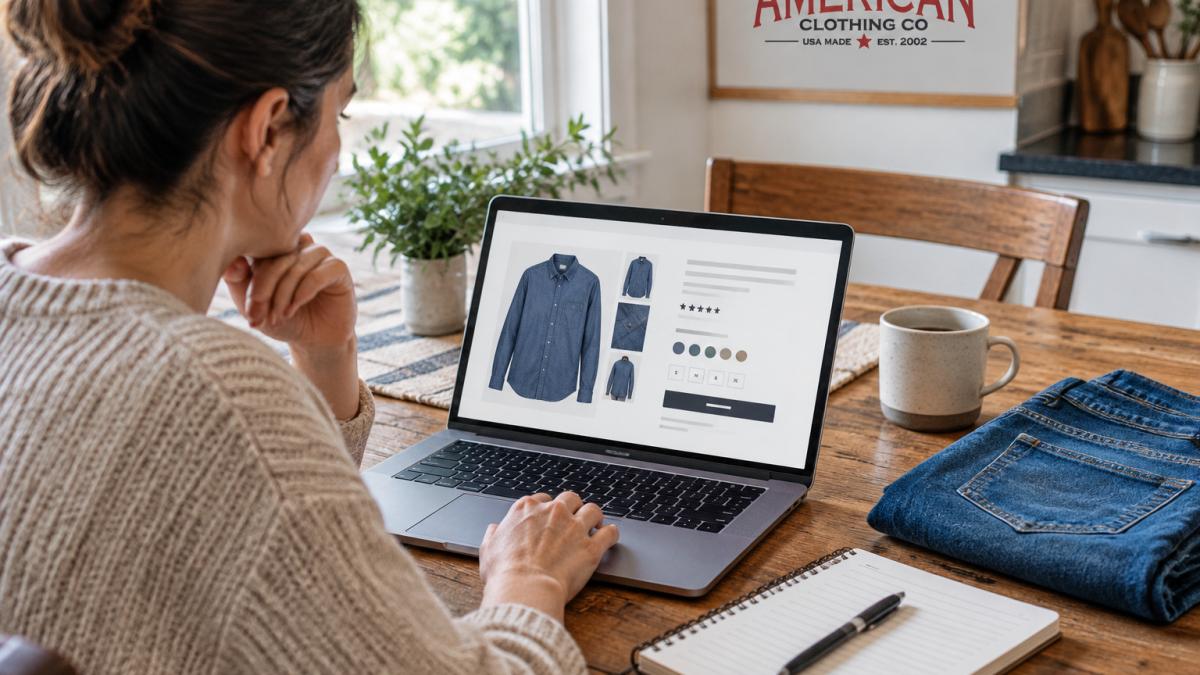
Check Where the Garment Was Actually Made
Country of origin is the fastest test. A brand that says "Made in USA" should be able to say where each part was made. Check the product's own description, not just the homepage.
Our Organic Full Zip Hoodie is made in New York, USA, using a blend of organic cotton and recycled polyester. You can see the full sourcing details on the Organic Full Zip Hoodie product page.
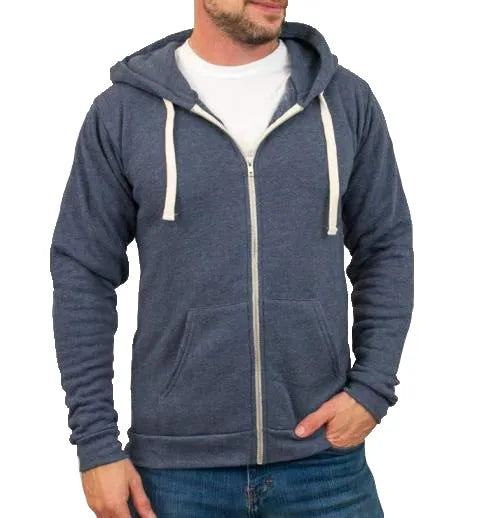
Watch out: a "Made in USA" label does not always cover every component. Some yarns or fabrics may be imported, so read the fine print.
Read the Product Page Before the Brand Page
Brand homepages often describe values in broad terms. The product page holds the specifics: fabric content, construction, and origin. Read it first.
For example, our AA202 Men's Carpenter Jean is made in the USA with US materials, uses 15 oz. denim, and is built with reinforced belt loops and a gusset. If you need work pants that hold up to daily use, check the construction details on the AA202 Men's Carpenter Jean before you decide.
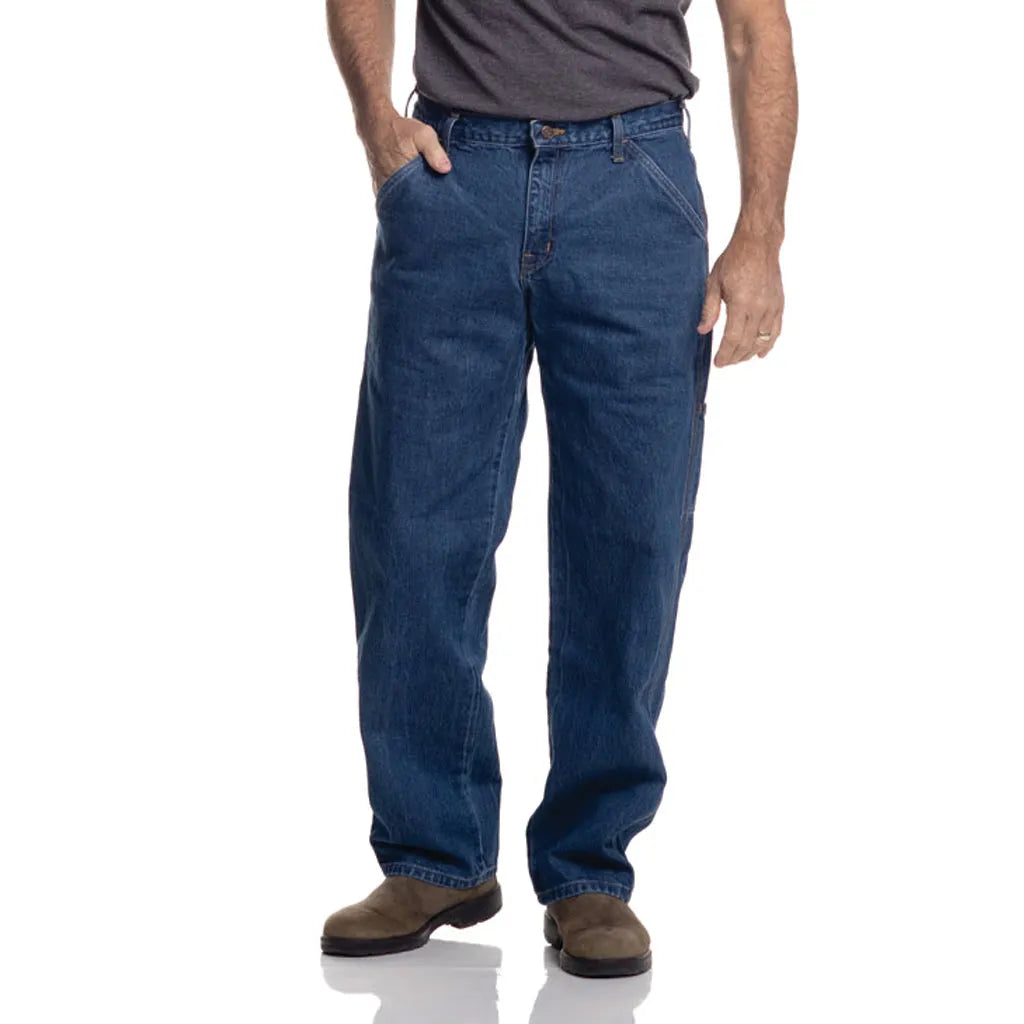
Look for:
- Fabric weight and fiber content
- Construction details such as stitching and reinforcement
- Origin of both materials and labor
The steps below each take a few minutes per item, and the table sums up what to check at each one.
| Step | What to check | Watch out for |
|---|---|---|
| Check where it was made | Country of origin on the product page | Imported yarns or fabrics |
| Read the product page first | Fabric weight, fiber content, construction | Broad values on the homepage |
| Check the fine print | Components and origin of materials | "Made in USA" not covering every part |
| Time per item | About 15 minutes | , |
Clothing Certifications for Ethical Sourcing and Their Limits
Certifications can help you verify a claim, but each one answers a narrow question.
Here is what the most common certifications verify, and where each one stops.
Material health and chemical safety. OEKO-TEX Standard 100 tests finished articles for harmful substances.
Animal welfare. The Responsible Wool Standard (RWS) and the Responsible Down Standard (RDS) trace animal-derived materials and set welfare criteria.
A few practical rules for reading any certification:
- Check the scope. Does the certificate cover the specific product, the facility, or the whole brand? Most cover a facility or a material, not a brand.
- Check the certificate number. Reputable certifiers publish a searchable database. GOTS, GRS, RCS, OEKO-TEX, and SA8000 all let you look up a valid certificate. If a brand cannot give you a certificate number, treat the claim as unverified.
- Check the date. Certifications expire and require renewal. An expired certificate is not proof of current practice.
Clothing Supply Chain Transparency: Questions to Ask a Brand
Supply chain transparency means a brand can show you the steps from raw material to finished garment, and can do it for the specific item you are holding, not just in a general statement about values. Most brands publish something. The useful test is whether that something is specific enough to check.
Trace One Garment, Not the Whole Brand
Brand-level transparency pages are a starting point, not proof. Pick the exact item you want to buy and try to trace it down to four points:
- Fiber origin. Where was the cotton, wool, or synthetic fiber grown or produced?
- Fabric and yarn. Which mill spun the yarn and wove or knit the fabric?
- Cut and sew. Which factory assembled the garment?
- Finishing. Where was it dyed, washed, or finished?
A brand that can name all four for a specific product is doing real traceability work. A brand that can name only the country of assembly is giving you the minimum. Neither is automatically a dealbreaker, but you should know which one you are looking at.
Questions That Produce Checkable Answers
Vague questions get vague answers. Ask questions that require a specific, verifiable response:
- Which factory sewed this specific garment, and in what city is it located?
- Where were the fabric and yarn produced, and by which mill?
- Do you audit your factories for labor conditions? Which standard, and how often?
- Can you share the certificate number for any organic or recycled content claim on this item?
A transparent brand will answer clearly and, where it can, point you to documentation. A brand that deflects, sends a generic values page, or answers a different question than the one you asked is telling you something.
Red Flags and Greenwashing Checks
Some claims sound ethical but carry little weight. Watch for these patterns:
- Vague language with no mechanism. "Eco-friendly," "conscious," "responsibly made," and "sustainable" are not defined terms. Ask what specifically makes the item qualify.
- A certification logo with no scope. If the brand cannot tell you which product or facility the certificate covers, the logo is decoration.
- Country of origin used as a stand-in for labor ethics. "Made in USA" tells you where assembly happened. It does not, by itself, tell you about wages, hours, or safety at that facility, those require their own evidence.
- A single ethical claim standing in for the whole picture. Organic cotton does not fix a poorly run factory. A fair labor audit does not fix a high-impact dye process. Ethical sourcing is several questions, not one.
Compare Trade-Offs Honestly
Labor ethics and environmental impact do not always point the same direction. A garment made domestically from imported conventional cotton may support local skilled work while carrying a higher material footprint.
our Organic Full Zip Hoodie is knit, dyed, cut, and sewn in New York from a blend of organic cotton and recycled polyester, and you can see the full sourcing details on the Organic Full Zip Hoodie product page.
Start Shopping With a Short Checklist at All American Clothing
Use this checklist before you buy from any brand, including ours:
- The product page names the country where it was made
- The fabric content and weight are listed
- Any certification applies to this specific item
- The brand can answer questions about its factories
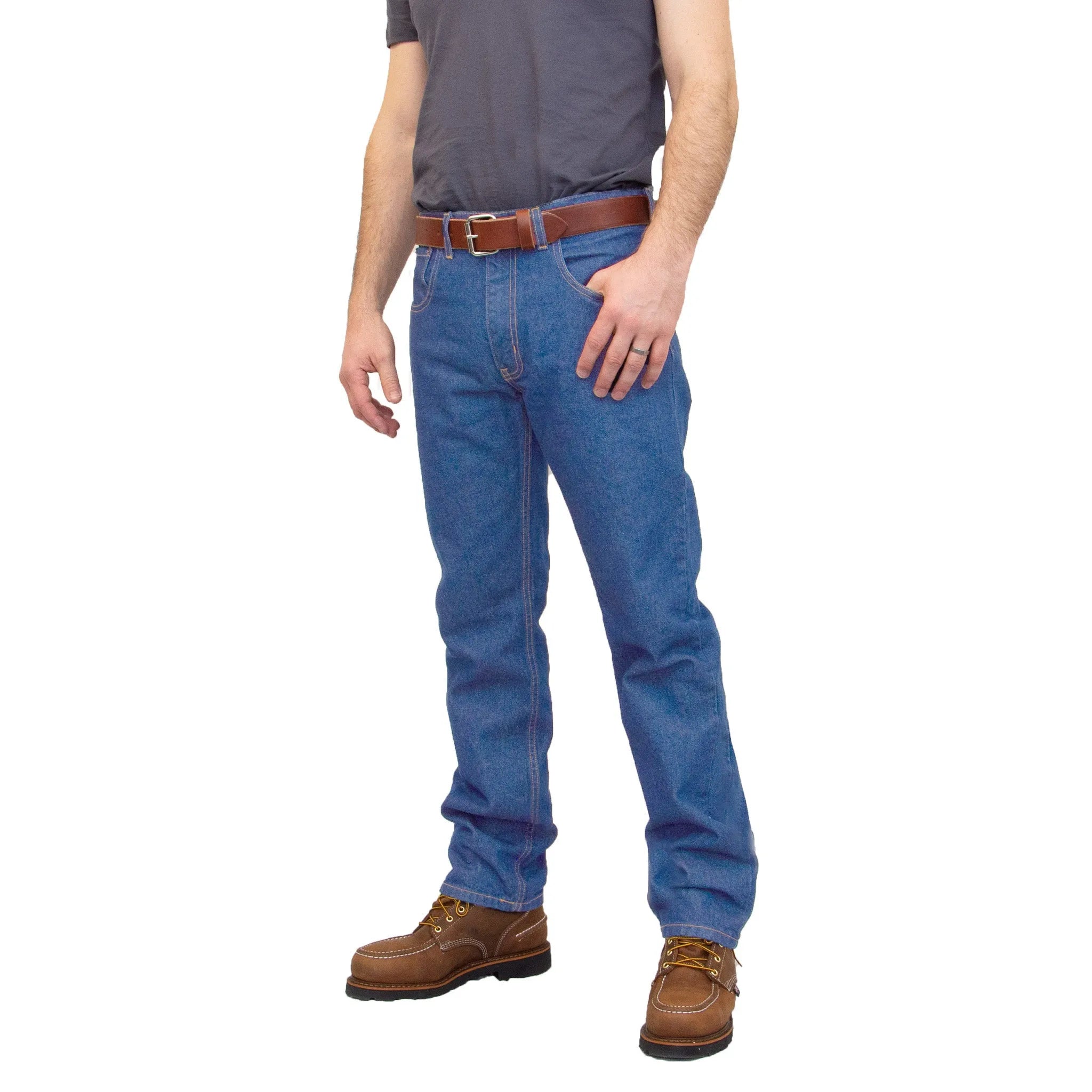
Our products are made in the USA, from materials to labor. If you want to start with a basic piece, browse the Men's Classic Jean. If you are comparing options for work pants, our guide on what separates the best USA-made canvas work pants for men walks through the details.
Frequently Asked Questions
How can I tell whether a clothing brand is ethical?
Start by checking whether the brand publishes where its garments are cut, sewn and finished, not just where the company is based. Look for named factories or regions, a supplier list, and details on wages and working conditions. Brands that share specifics such as fabric origin and manufacturing location give you more to verify than brands that rely on general statements about caring for workers. Compare what the brand says on its site with what its product labels state, and treat gaps between the two as a reason to keep looking. At All American Clothing, the Organic Full Zip Hoodie is listed as made in New York, USA from materials through sewing, so its origin details can be checked directly on the listing.
What certifications should I look for in ethical clothing?
Certifications can help, but each one covers a different part of the supply chain. Some focus on fiber content, such as organic or recycled material claims, while others address labor conditions or chemical limits in production. Check whether a certification applies to the specific garment you are buying, not just the brand overall. Also check whether the certifying body audits factories on an ongoing basis. A certification label alone does not prove wages, working hours or safety, so pair it with the brand's own disclosure about where and how the item is made.
Are clothes made in the United States ethically sourced?
Made in USA does not automatically answer every ethical question, but it does give you a clearer starting point for verification. Domestic production makes it easier to check where a garment was sewn and under what labor rules it was made, because the supply chain is typically closer to home. Still, a product can be assembled domestically while its fabric comes from overseas, so read the listing to see whether the claim covers materials as well as labor. At All American Clothing, the Men's Carpenter Jean is listed as made in USA with USA material from the materials to the labor.
Can affordable clothing be ethically sourced?
Yes, but affordable options usually require more research and a clearer sense of your priorities. Lower prices can come from secondhand shopping, from buying fewer pieces that last longer, or from brands that publish transparent production details at a moderate price point. Calculating cost per wear can help you compare a higher-priced garment that lasts for years against a cheaper one that wears out quickly. Focus on the specific details that matter most to you, such as fair wages, fiber source or recycled content, and accept that no option will meet every standard perfectly.
